
Nvidia’s $600 Billion Crisis: What Jensen Huang’s Exit Means for the AI Giant

In a recent turn of events that has shocked the world, Nvidia’s newest and biggest challenge yet may have nothing to do with technology.
On November 12, 2026, Nvidia CEO Jensen Huang announced his resignation from the company. Following the discovery of his affair involving a woman with suspected ties to Chinese intelligence, the company that has led the revolution in artificial intelligence and is widely regarded as the powerhouse of technology has been under enormous pressure, with losses of approximately $600 billion in market value this week. After Jensen Huang’s resignation and Nvidia’s appointment of CFO Colette Kress as interim CEO, the market responded with shares plunging as much as 12% on Thursday. Nvidia’s valuation has officially dropped below $4 trillion, and investors are concerned about whether the company will be able to succeed without its longtime leader and visionary genius, Jensen Huang.
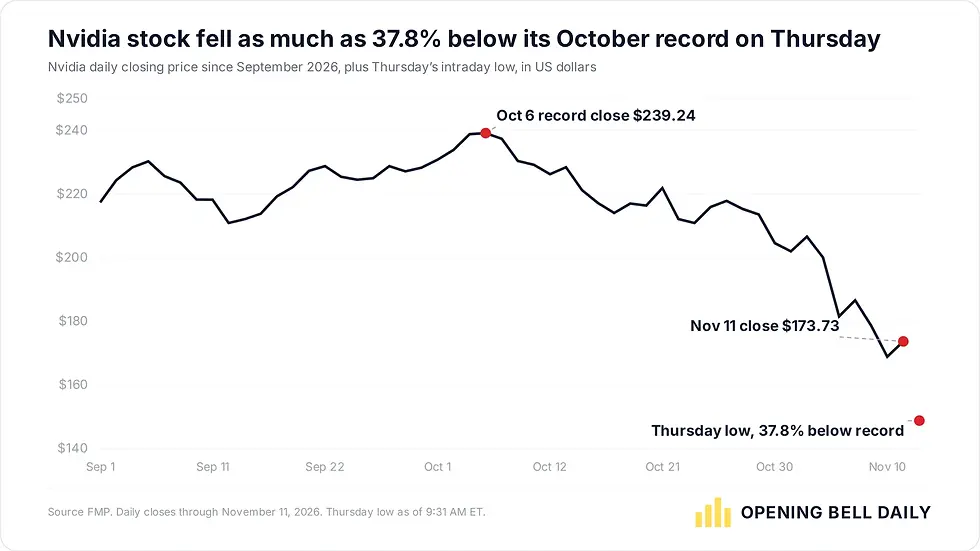
Huang’s departure is generating concerns beyond Nvidia’s leadership. Jensen Huang developed strong relationships with major technology companies and people of great influence that helped Nvidia secure its dominance in the AI chip market. Specific worries are rising over whether Nvidia can continue to navigate the complex U.S. export restrictions, particularly those limiting advanced chip sales to China.
Wall Street analysis and expectations for the company are quickly changing. Investment firm Baird downgraded Nvidia from Buy to Neutral, took its price target down from $500 to $200, and expressed concerns over potentially reduced Chinese sales and slower AI infrastructure spending, which are rising in prevalence, especially after recent midterm elections. Similarly, Steifel reduced its target from $315 to $205.
In the rapidly advancing and ultra-competitive artificial intelligence landscape, a slowdown in revenue growth and infrastructure investment would cause Nvidia to fall behind and lose its dominance. This has already been illustrated by the rise in shares of AMD and Broadcom on Thursday, the same day of Huang’s resignation.

All eyes now turn to Nvidia’s November 17 earnings report, when investors will evaluate whether its underlying business can withstand the turmoil. Can the company maintain its dominance without the leader and visionary who built it?


