Moderna's Cancer Vaccine Faces a $3 Billion Test

Moderna is best known for its breakthrough COVID-19 vaccines back during the pandemic. However, the company now focuses on developing cancer treatments and is approaching a critical milestone. On October 24, 2026, Moderna and its partner Merck are set to present their phase 3 results for intismeran autogene, an advanced personalized mRNA vaccine for battling cancer. After positive trial results earlier in August, Moderna shares have already jumped 284%, meaning that this upcoming data could have major implications for both cancer treatment and the company’s financial future.
Unlike conventional vaccines, intismeran is actually designed specifically for each individual’s cancer. Researchers analyze mutations within a patient's tumor and identify up to 34 neoantigens, which are used to create a customized mRNA vaccine. After surgery, the trained immune system should be able to recognize and attack remaining cancer cells. Moderna’s partnership with Merck allows them to combine the power of intismeran with Merck’s immunotherapy, Keytruda, to ideally significantly reduce the likelihood of melanoma returning.

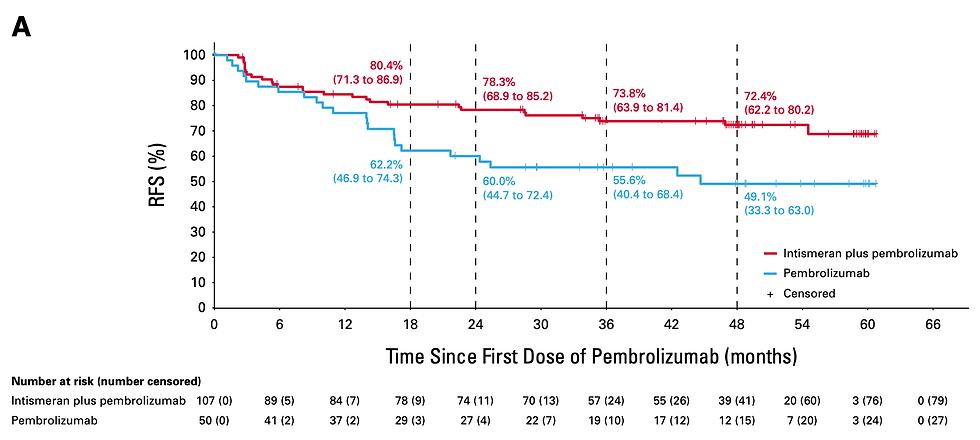
Early clinical evidence supports a real chance of success for the treatment. A Phase 2b trial demonstrated a 49% reduction in the risk of cancer recurrence or death compared to Keytruda alone. Their more recent Phase 3 trial, which consisted of 1137 patients, is reported to have successfully met primary and secondary endpoints. However, investors are of course waiting for the October 24th reveal of detailed efficacy data, which will help them determine whether the treatment can deliver meaningful benefits to a larger population.
The financial stakes are substantial. Assuming regulatory approval, Barclays predicts that intismeran will generate over $3 billion in annual melanoma sales by 2035. This would be extremely helpful for Moderna’s operations, as its COVID-19 vaccine business has slowed down considerably following the end of the pandemic. Moderna and Merck have agreed to share worldwide profits and development costs equally.
Nevertheless, commercialization presents many considerable obstacles that must be overcome. Due to its personalization component, each vaccine must be individually manufactured, which currently takes approximately 6 weeks. These manufacturing requirements could increase cost and complicate large-scale distribution, hindering and limiting profitability even if clinical results are positive.
Moderna’s financial position adds urgency and shows its desperate need for success with intismeran. The company reported just $145 million in second-quarter revenue against a $782 million net loss, highlighting its dependence on successful pipeline development. The company is also seeking to expand its commercial research beyond melanoma, as it is currently investigating the vaccine in lung, kidney, and bladder cancers.
Ultimately, October 24 represents more than another clinical trial announcement. For Moderna, it could help determine whether personalized cancer vaccines become a sustainable multibillion-dollar business or remain an expensive scientific breakthrough.